SME Units: What Are They, and Is Buying or Renting More Advantageous?
A practical guide to SME units: definition, typical specifications, and an honest comparison between buying and renting — fiscally, financially, and strategically.
SME units have, in recent years, emerged as one of the most sought-after real estate products in Belgium. Whether you are a growing enterprise seeking storage, a craft business requiring a workshop, or an investor pursuing stable returns — the fundamental question remains: to buy or to lease? This guide provides a comprehensive overview.
What exactly is an SME unit?
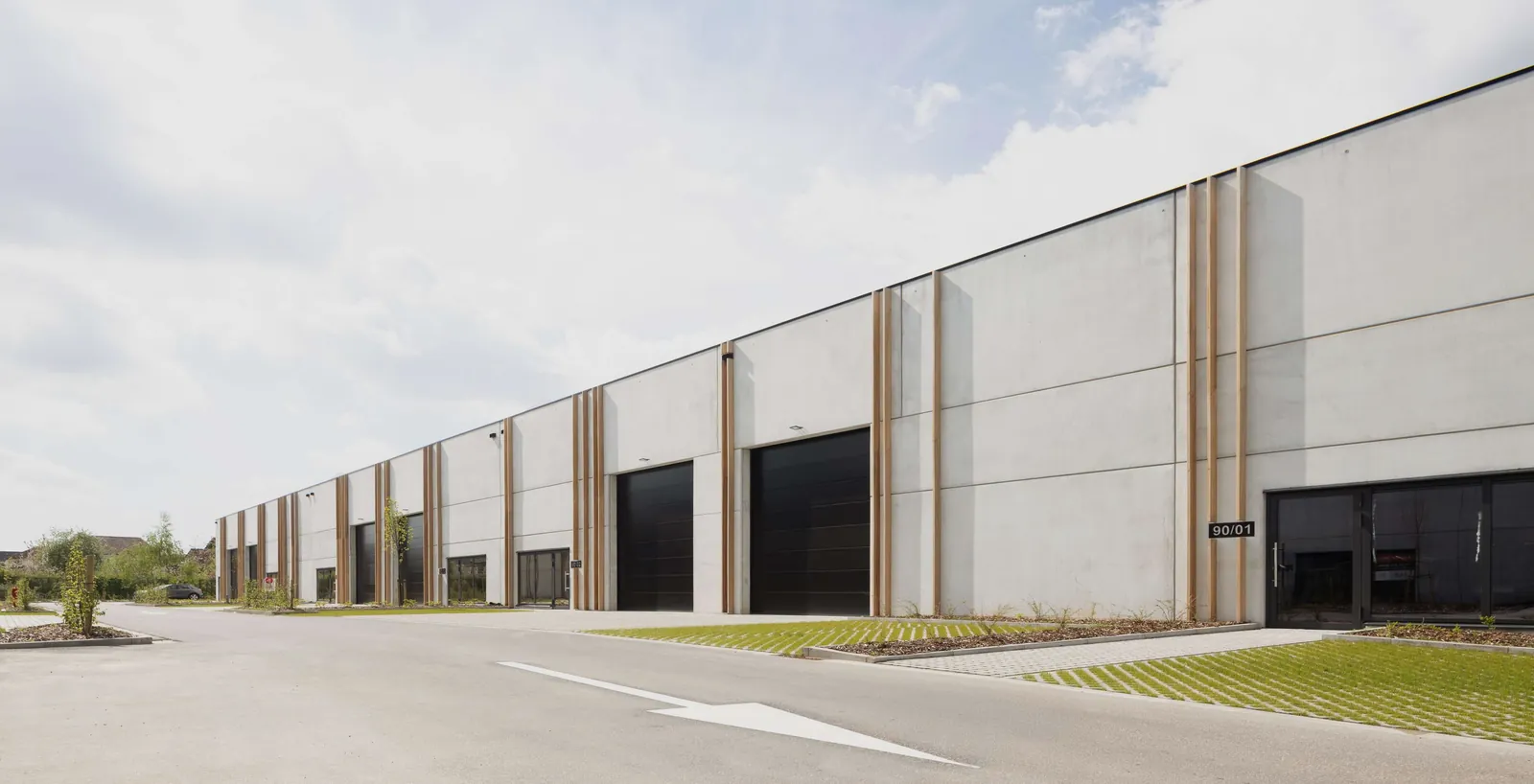
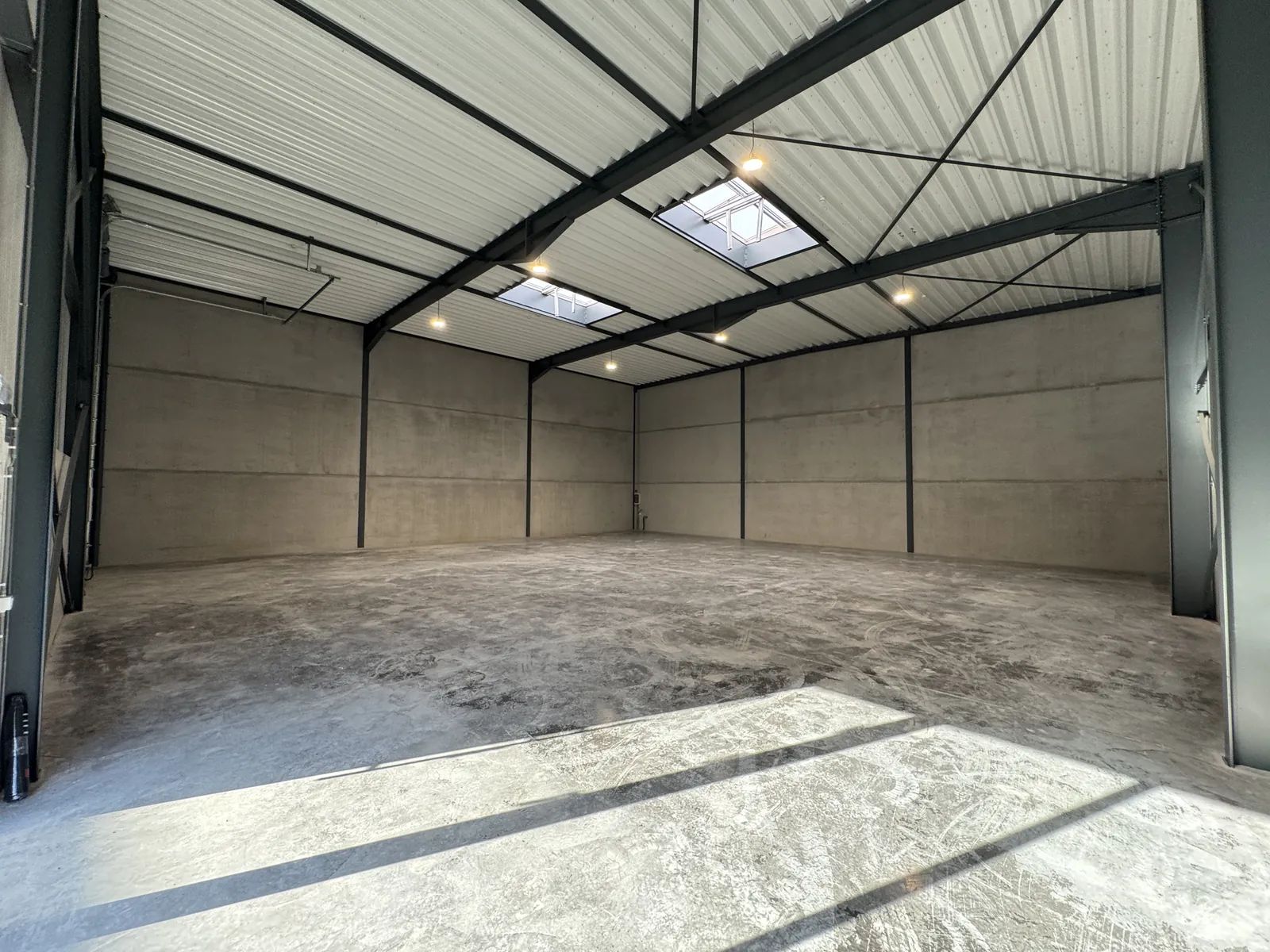
An SME unit (also referred to as a business unit or business park unit) is a modular commercial space that forms part of a larger complex. Typically, a unit combines a warehouse or workshop area with a limited office or mezzanine component. Sizes generally range between 150 and 1,500 m², perfectly aligning with the requirements of small and medium-sized enterprises.
Typical Specifications
• Clear height of 6 to 8 meters • Sectional door (4x4.5 m) and separate access door • Floor loading capacity of 2,000 to 5,000 kg/m² • Equipped with water, electricity (often 3x400V), and data connectivity • Optional: solar panels, charging stations, sprinklers, office with sanitary facilities • EPC label A or better for new constructions
Who are SME units intended for?
The target audience is broad: e-commerce companies requiring inventory space, installers, carpenters, electricians, importers, service providers with material storage needs, hobbyists engaged in commercial activities, and investors seeking readily rentable real estate. Thanks to their modular nature, it is often possible to combine multiple units as your business expands.
Purchasing an SME unit: advantages and disadvantages
Purchasing signifies wealth accumulation. You build equity, benefit from value appreciation, and can leverage tax advantages through depreciation and interest deductions. For those operating as self-employed individuals or through a company, an acquisition can also be structured optimally from a tax perspective — for instance, via company purchase, split ownership (usufruct/bare ownership), or through a patrimonial company.
Advantages
• Wealth accumulation and retirement capital • Depreciation over 20 to 33 years (often around 3%) • Deductibility of financing costs • Protection against rent increases • Freedom to implement modifications • Possibility of subletting
Disadvantages
• High initial investment (equity contribution 20-30%) • Registration duties or VAT upon purchase • Maintenance and insurance are at your own expense • Reduced flexibility upon relocation or cessation of operations • Liquidity tied up in real estate
Leasing an SME unit: advantages and disadvantages
Leasing primarily offers flexibility and a low entry barrier. For startups, rapidly growing companies, or activities with an uncertain horizon, leasing is often the logical choice. The rental cost is fully deductible as a business expense, and you avoid tying up capital in real estate.
Advantages
• No substantial initial capital outlay • 100% tax-deductible as an operating expense • Flexibility to relocate or expand • No concerns regarding structural maintenance • Capital remains available for operational activities
Disadvantages
• No wealth accumulation • Rent is considered 'lost money' in the long term • Risk of rent indexation and review • Limited freedom for renovations • Dependence on the landlord for lease renewal
Buying or Renting? A Comparison
The optimal choice hinges on your time horizon, financial standing, and growth projections. As a general guideline: entities planning to occupy the same unit for at least 7 to 10 years and possessing sufficient equity will almost invariably benefit more from purchasing. For shorter horizons, rapid growth, or uncertainty, renting presents a more financially and strategically advantageous option.
"Acquiring real estate is a 20-year decision, not a 2-year decision. Always align it with your long-term strategy."
Tax Considerations for Purchase
When purchasing a newly constructed SME unit, the VAT regime (21%) typically applies, which is fully recoverable for VAT-registered businesses. For existing properties, registration duties apply (12% in Flanders). Depreciation is typically linear over 20 to 33 years; interest and associated costs are deductible. For those purchasing via a company, investment deductions and notional interest deductions may also be relevant — always seek guidance from your accountant or tax advisor.
Key Considerations When Selecting a Unit
• Location: accessibility via motorway, parking, visibility • Construction Quality and EPC: solar panels, insulation, sprinkler systems • Zoning and Permits: SME zone, storage, craft or retail • Management: is there a property manager (syndicus) or business association? • Flexibility: can you expand later or sublet? • Rental Potential: common format between 200 and 600 m²
SME Units as an Investment
For investors, SME units offer attractive net yields, often ranging between 5.5% and 7% gross. The rental market is stable, tenants are typically businesses with a long-term outlook, and maintenance burdens are lower than with residential real estate. At LCV, we develop readily rentable units in well-located business parks — explore our offerings via the 'Beschikbaar' (Available) page.
Conclusion
SME units are a valuable cornerstone for both users and investors. Those seeking stability and thinking long-term are best served by purchasing. Those requiring flexibility or just starting out are better off opting for rental. In both cases, the principle applies: choose quality, a prime location, and a reliable partner. LCV Real Estate is pleased to guide you through both processes — from the initial viewing to turnkey delivery.